
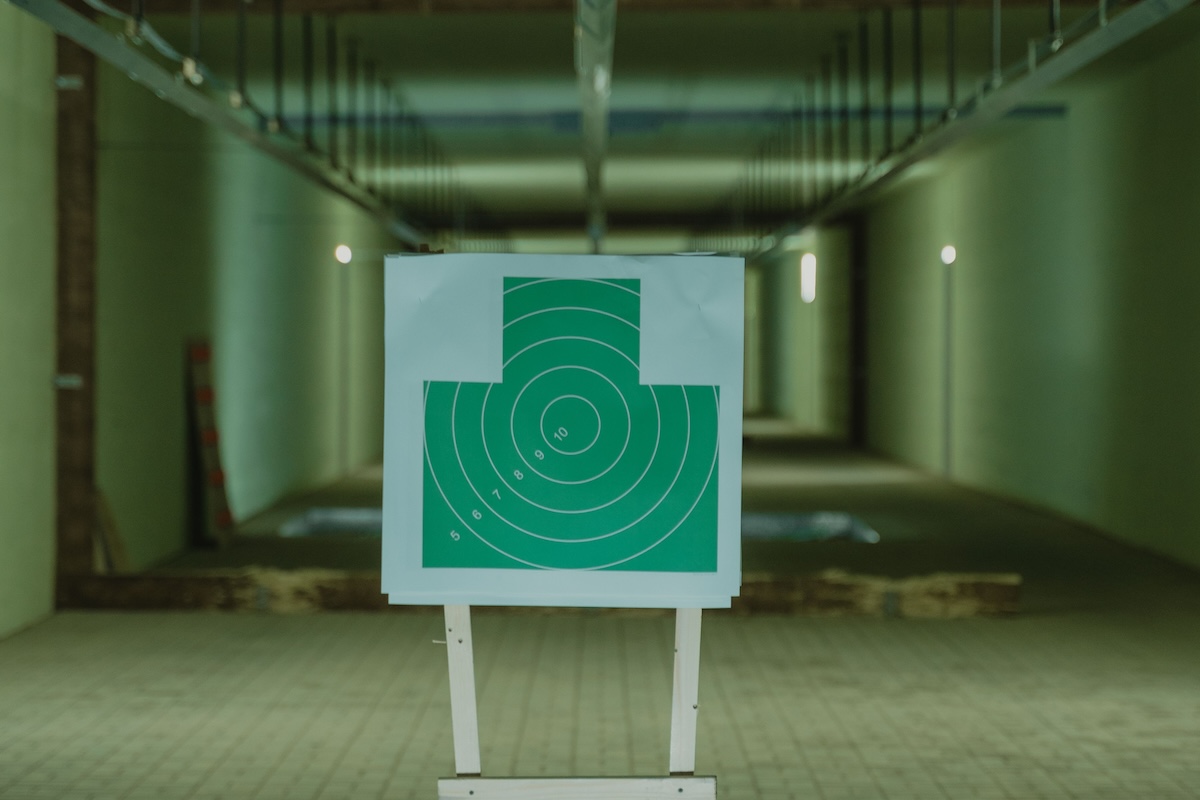
If I run a shooting range, I can’t treat my insurance like gun shop coverage. A range has live-fire injuries, lead cleanup, staff supervision claims, rental gun issues, and range-system failures. A basic CGL policy with a firearms endorsement may look fine on paper, but it can still leave out the claims that matter most.
Here’s the short version:
One point stands out: firearm injury suits can top $1 million in litigation costs, according to Joseph Chiarello & Co., Inc. [1]. That means one gap in coverage can turn into a six- or seven-figure problem fast.


So when I review a range policy, I’m not asking whether I have some firearms coverage. I’m asking whether the policy fits what happens when people fire live rounds on my property.
You can see the difference in the claims a range tends to face. A shooting range deals with live-fire injuries, supervision claims, lead exposure, and equipment failures - the kind of risk a standard CGL setup doesn't fully cover.
Most of the risk starts on the firing line. From there, it extends to supervision issues, lead, and the special systems that keep the range running.
Liability doesn't stop once a rented firearm leaves the lane. If a defect or malfunction shows up after the customer has gone home, the claim may fall under completed operations. That's where many generalist CGL policies start to crack. They often limit coverage for firearms-related work, which can leave range owners exposed for incidents that happen off-site.
And it doesn't stop with rental guns. The same problem can extend to the work tied to the systems that keep the range open and safe.
Range infrastructure is not standard commercial property. An indoor range depends on ventilation, HVAC, bullet traps, and automated target systems to run safely. Outdoor ranges have their own fixed setup, including berms, target frames, electrical systems, and drainage.
Generalist carriers often undervalue this equipment or leave parts of it out altogether. That becomes a big problem when a key system goes down. If the ventilation fails or a bullet trap needs repair, you're not dealing with a minor hiccup. You're dealing with a shutdown.
Equipment breakdown coverage is not a nice extra. It's the coverage that helps keep the range in business after a loss.
Most non-specialist range policies fall short in three spots:
Those gaps hit the same risks that make ranges different from a standard business: firing-line injuries, lead exposure, and supervision calls. In plain terms, the policy can look fine at first glance and still miss the claims that matter most.
That's why the next move is simple: press your carrier on the exact policy terms.
Use these questions to pressure-test the gaps above. Start with the exposures most likely to get carved out: participant injury, RSO liability, lead, completed operations, and equipment breakdown.
Does your policy exclude bodily injury to a participant on the firing line? Ask your carrier to show you the exact endorsement that covers it. Don’t settle for a verbal yes.
Then ask a second hard question: if a projectile leaves your property and injures someone or damages a nearby building, does the policy respond at full limits? After that, look at your liability limits. Were they chosen with a serious range claim in mind, or were they picked like a standard business policy? And if you carry umbrella or excess coverage, is it built for range exposures or just sitting on top of a form that has major holes?
If the policy doesn’t plainly cover firing-line injury, the next issue is simple: who’s left exposed when supervision breaks down?
Are your RSOs and instructors covered automatically, or does each one need to be named as an additional insured? That matters because negligent supervision claims can name an RSO directly. Ask how the policy handles that, and get the answer in writing.
You should also ask whether the pollution exclusion blocks claims tied to lead-related injury, lead dust, or abatement costs. If it does, you may have no coverage for one of the main exposures in this business. That’s not a small detail. It’s the kind of gap that can hit hard when a claim shows up.
Check your workers' compensation policy too. It should reflect lead-exposure risk for employees working in an indoor range environment.
Once supervision and lead are dealt with, move to the losses that tend to appear after the event itself or after a system goes down.
Ask whether completed operations coverage applies to rental firearms and any service work done on-site. Even a sublimit can leave you exposed after a rental-gun malfunction.
For equipment breakdown, ask whether ventilation system failure or bullet trap breakdown is a covered cause of loss. Also ask whether a safety shutdown triggers business interruption coverage.
For property, confirm that specialized range components are scheduled individually at replacement cost. That includes:
Those items should not be bundled into a generic building or contents value.
If the answer isn’t in writing, treat the coverage as missing. Joseph Chiarello & Co., Inc. has 40+ years of experience underwriting indoor and outdoor ranges, trap, skeet, and sporting clay fields. The next section shows what purpose-built shooting range insurance should include.
If a carrier can’t confirm these exposures in writing, the policy isn’t purpose-built for a range.
A purpose-built range policy is not just a standard CGL form with a few endorsements bolted on. It needs to cover firing-line participant injuries, RSO and instructor negligence, and lead-related losses carved back from the pollution exclusion. It should also pay for environmental remediation costs, which can hit six or seven figures depending on the extent of contamination.
Completed operations coverage should reach rental firearms and on-site service work, including claims that show up after a customer leaves. Equipment breakdown coverage should respond to ventilation system failure, target-control system failure, and bullet trap failure. And property coverage should value the range for what it is: a site with specialized construction, from soundproofed indoor structures to outdoor berms and containment systems.
A firearms endorsement on a standard CGL form is not enough.
Ask whether your shooting range owner insurance does more than a standard CGL policy. You want clear confirmation that it covers firing-line injuries, products and completed operations, and claims tied to rental equipment or training services.
It’s also smart to verify that RSOs are covered as additional insureds, that training or supervision claims are addressed, that lead abatement coverage is included, and that your liability limits fit the risks of your range. Joseph Chiarello & Co., Inc. specializes in purpose-built protections for indoor and outdoor ranges.
Usually, no.
Standard general liability policies often leave out pollution-related incidents. That means they may not pay for lead contamination, cleanup costs, or exposure claims.
For indoor and outdoor ranges, specialized environmental liability coverage is often needed. Range owners should make sure their policy clearly includes environmental or lead abatement protection instead of relying on standard liability alone.
Ask whether your policy includes completed operations coverage for claims tied to rental firearms, training services, or products sold after a customer leaves your range.
Then get specific. Confirm whether the policy covers claims tied to:
For RSOs, ask whether they can be listed as additional insureds. Also confirm whether the policy covers liability tied to supervision and instruction.
Don't wait until it's too late to make sure your gun shop is covered. At Joseph Chiarello & Co., Inc., we’re here to help you navigate the ins and outs of gun shop workers compensation insurance to ensure you're prepared for any noise-related risks, including hearing damage. Reach out to us today to review your current policy or get a customized quote. Protect your team and your business with the right coverage—because their safety is worth it.
Call Now: 800-526-2199. Or submit your inquiry below. We look forward to having the opportunity to work with you!